
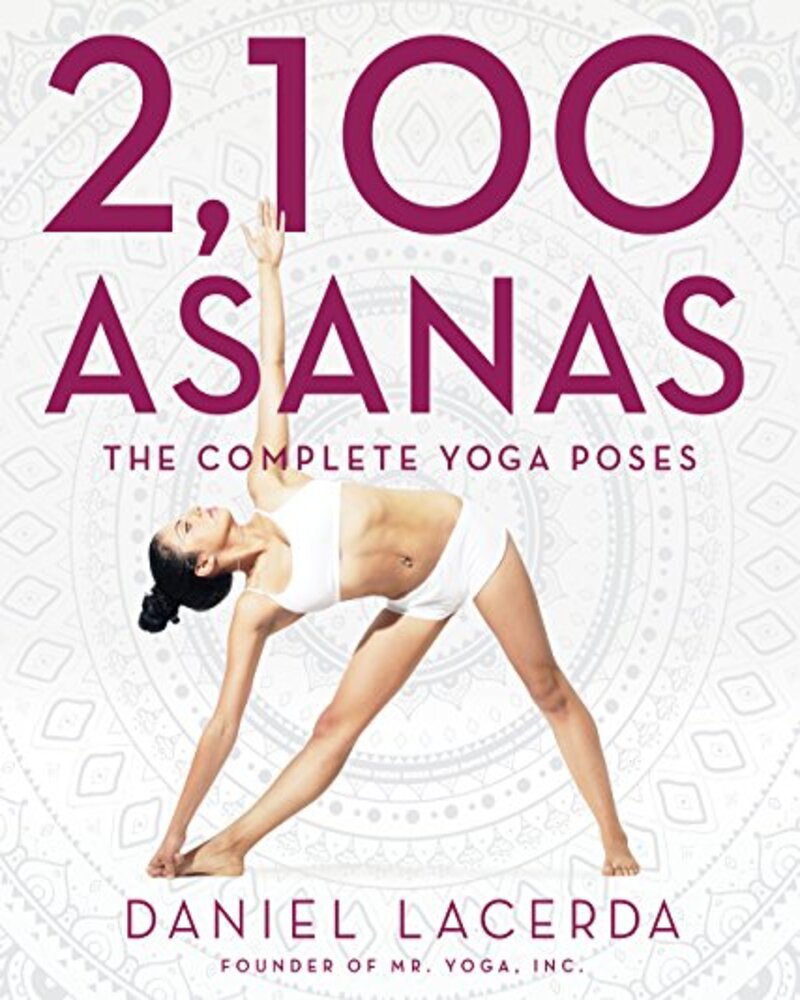
2,100 Asanas: The Complete Yoga Poses
This fully-illustrated New York Times bestseller categorizes an astonishing 2,100 yoga poses through photographs and descriptions for optimal benefit including adaptations for all levels of expertise and ages.
A thoughtful, inspiring, meticulously-crafted guide to the practice of yoga, 2,100 Asanas will explore hundreds of familiar poses along with modified versions designed to bring more healthful options to yogis of all experience and ability.
Organized into eight sections for the major types of poses — standing, seated, core, quadruped, inversions, prone, supine and backbends — and each section gently progresses from easy to more challenging. Each pose is accompanied by the name of the pose in English and Sanskrit, the Drishti point (eye gaze), the chakras affected and primary benefits.


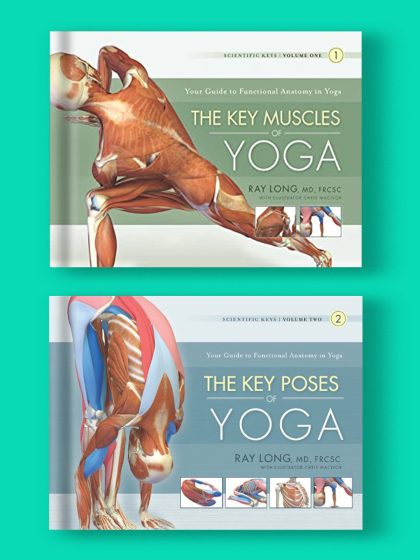
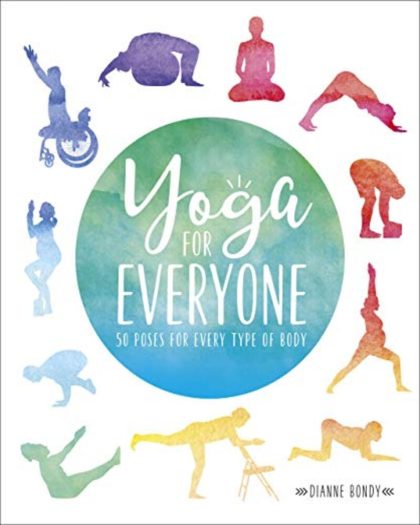
Amazing clear photos of each pose and modification.
For some it could be a reference material, I bought it to just learn to see if I could to do some to work on flexibility and health.
This is a great reference book while working towards injury recovery. It's great to see so many pose variations for beginners. For example, the 'easy one-legged king pigeon pose 1' on page 376 is great for people working towards the 'one-legged king pigeon pose 1 preparation' on page 377. Getting deeper stretches for certain muscles have been a goal towards my recovery along with regular r8 roller usage for my Piriformis and Psoas muscle. This reference book allows me to share rookie stretches with elderly friends.
Having reviewed every pictured pose, I've already noticed a few of stretches that could use better form presentation.
Having no background in Yoga, I can only hope that all data in this book is accurate for learning this discipline.
EDIT: March 13, 2018
I've been putting together my own routine with pictures. The alternative english pose names really help.
However, I have noticed that spelling isn't always correct such as on pages 682 and 683 where Muktyasana is also spelled Muktasana respectively. I have noticed many uses of '...yasana'. Perhaps, that's just how sanskrit goes..
Mi sarei aspettata piu spiegazioni inerenti alle diverse pose e asanas e le relative progressioni.
Lo consiglierei a chiunque abbia gia un minimo di conoscenza,forse non ai principianti.
Grazie
This is why this book is so valuable. It is a great reference book. I ordered my copy in hardcover, so it will not bend or assume unseemly shapes. Book is made of high quality paper and has fantastic photography pictures of each and every pose demonstrated by very experienced practitioners/teachers. Author of the book is Canadian yogi who dedicated his life teaching yoga and he thought yoga to many athletes over his career. Most of the poses are demonstrated by female practitioners but there are a few male practitioners and they all look amazing. Each pose has a name in Sanscrit and English and description of it. I want to thank Daniel Lacerda for creating one of the most precious asana books that compiles all 2,100 poses that I could find in 10 years of practicing yoga.
The introduction to the book is vry thoughtful and also gives a brief description of yoga philosophy. People unfamiliar with yoga will be surprised to learn that yoga is so much more than a physical practice.
For me there is a bit of confusion around some of the sanskrit names.... sometimes I learned a different sanskrit name for the same pose. However, that is not a deal breaker for this book, since Sanskrit isn't what this is about. This is still an incredible investment for all yoga teachers and anyone interested in learning something new.
I wasn't sure I'd like the way the book was divided (many books divide poses by difficulty level) but quickly found that having it set up by the type of pose was quite logical. The accompanying dual names and information were very useful, particularly modifications.
Even if you never wind up using this book to practice yoga it's quite beautiful to look through. The models make the poses look easy, almost natural. It's a very serene experience. I'd almost recommend it to art students as a reference for how muscle and bone can move in harmony.
I would whole heartedly recommend 2,100 Asanas for yoga enthusiasts of all levels. I'm also giving it a strong recommendation for art students.
Notes: Review copy received via NetGalley.
A must read for anyone who wants to expand their knowledge of yoga, and try new poses.
Don't listen to the complaints about exploitation. It's a little nuts. I'm a feminist and pragmatist. Glad I can see the details in the poses.
It helps me to perfect my postures, modify the ones I know and the pictures are really nice. I also like the that the proper names are used. I used it more like a dictionary, whenever I need to look up a posture. However, it is also nice to just browse. I personally believe that every yogi who is seriously practicing yoga and improving postures or thinking about getting a teaching license should have this in their yoga book library.
I have to say that more of this are invented new ones and not real yoga poses, there is no descriprion on how to go in or out the pose, or alignment indication.
This is a great reference book for Yoga Teachers like myself. I appreciate that this isn't just a yoga asana book but also explains the chakras being affected with each pose.
It's photos are catorgorized beautifully with great depth and clarity on each pose, and has a very user friendly layout. I share this book with all my students and encourage them to just get on their mat and explore all the possibilities.
Love you Daniel Lacerda, one of my favorite teachers! Thank you for your devotion and epic creativity. All I have to say is Jah vibes! And big up to all the models!! :)
– Josiah Batson
Each pose lists the name inEnfliah and Hindi, pose type; drishti point and modifications. It is even color coded for chakras. But, honestly, do you really need a line that says "pose type seated forward bend" when the picture shows someone seated on the floor and reaching for their toes? Or, for example, some of the modifications are not well described. For example, in kirmasana prep, the modification is "grabbing onto the ankles". Well, the regular pose shows the model grabbing the ankles. So the modification is...?
If they had arranged the poses so that modifications and prep poses were in order, it would have made more sense and you would have pictures of the modifications. Also, there is no verbal description of the lose or how to get into it. To me, that is the biggest issue.
It would have also been nice to have some help in groupong these into a practice